THE
SWITZERLAND
CROSSING
February – April 2018 · ~400 km · East to West
It Started at a Restaurant on the Border.
On a cold February morning in 2018, Amir Kazemi stood at the Hu Bin restaurant on the Austria–Switzerland border and took his first skip. What followed was roughly 400 kilometres of jump rope — through snow, sleet, highway shoulders, mountain towns, and city streets — all the way to the CARE International headquarters in Geneva.
No support vehicle. No team. Just a rope, a route, and a reason.
The reason: children without schools. The mission: raise awareness and funds for CARE International's education programs. The method: one of the most physically demanding solo crossings Switzerland had ever seen.
Frozen and Fighting.
The first weeks were brutal. February in eastern Switzerland doesn't forgive. Amir skipped through fields of snow with his face wrapped against the wind, temperature below zero, ing ice on the upswing. Some days the conditions were so harsh he could barely see the road ahead.
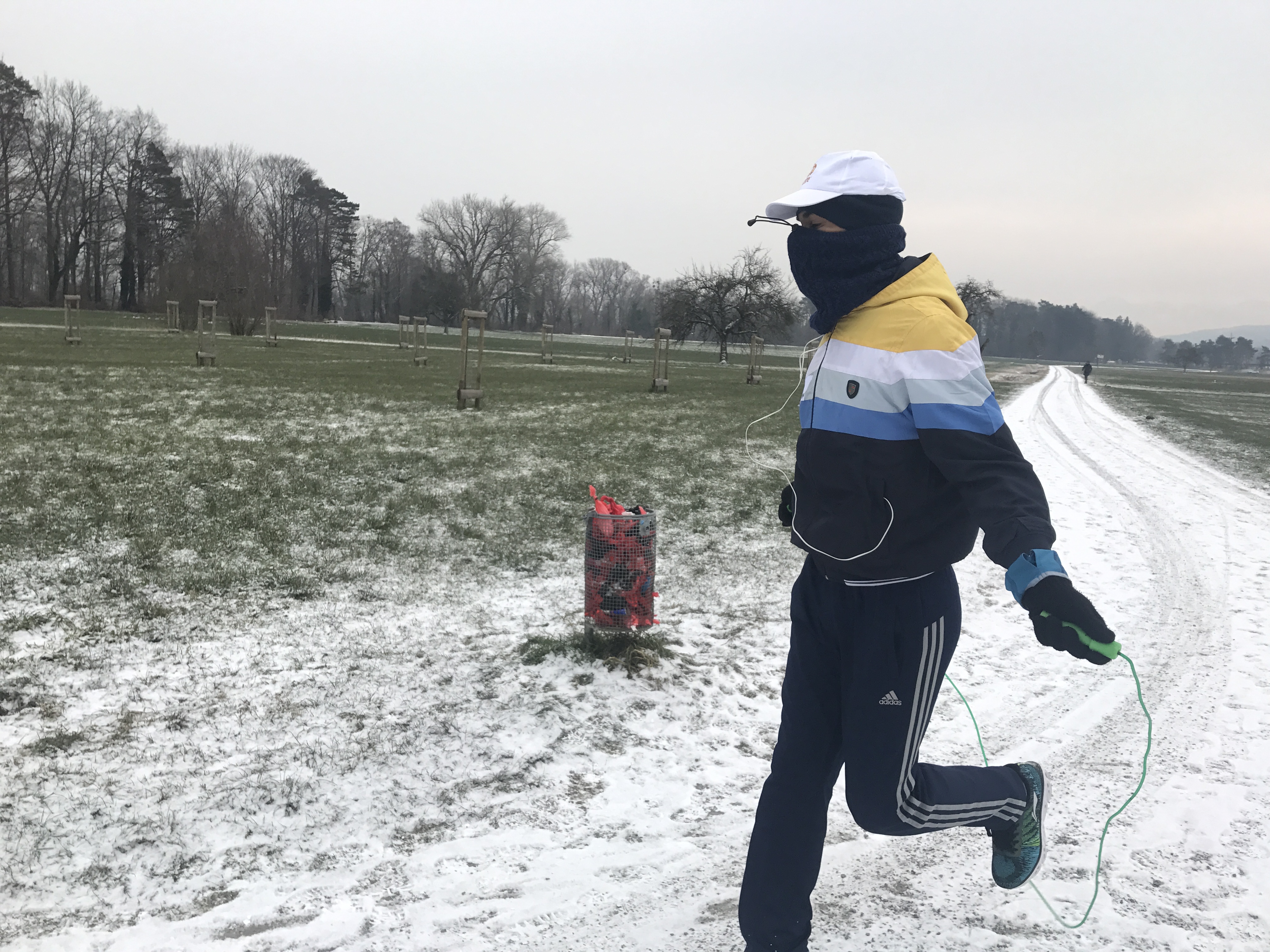
Rorschach. St. Gallen.
Winterthur. Zürich.
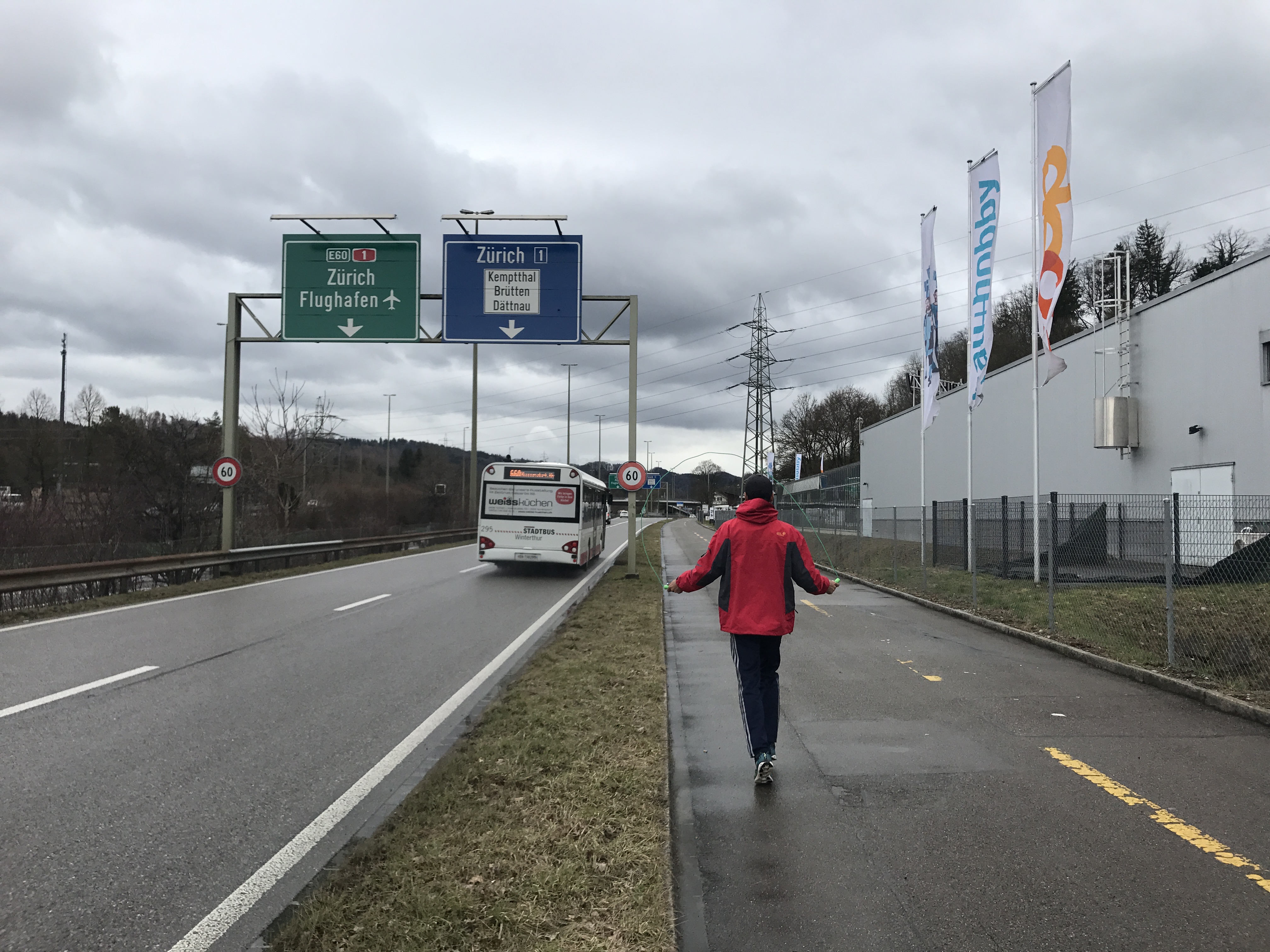
Day after day, the highway signs became mile markers of progress. Each city a checkpoint, each step proof that it was possible.
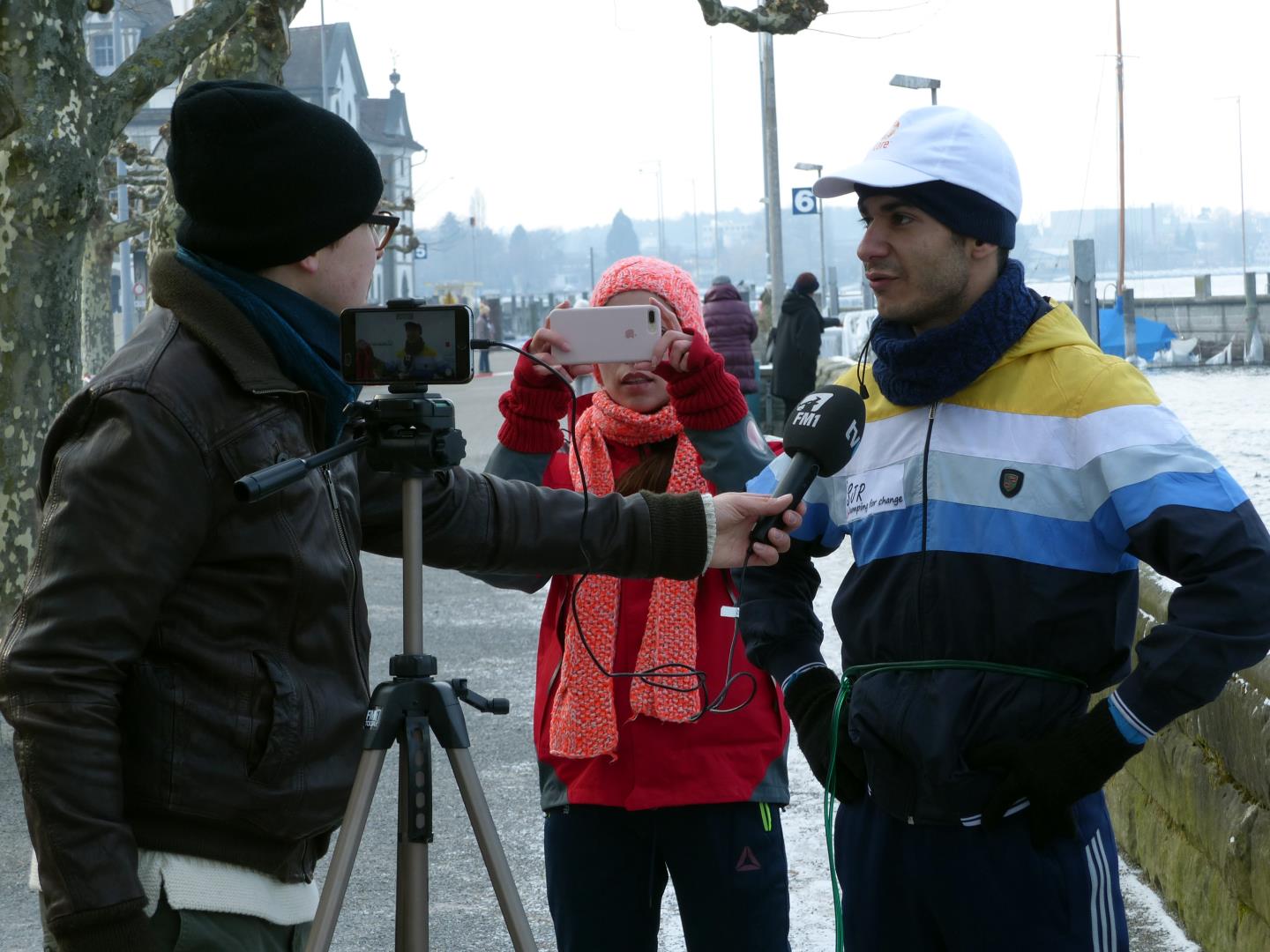
Swiss radio picked up the story early. FM1, the regional broadcaster, found Amir on the lakeside and put a microphone in his face. More coverage followed — Tagblatt, Zuger Zeitung, Rorschacher Echo. The story spread across four cantons.
Halfway.
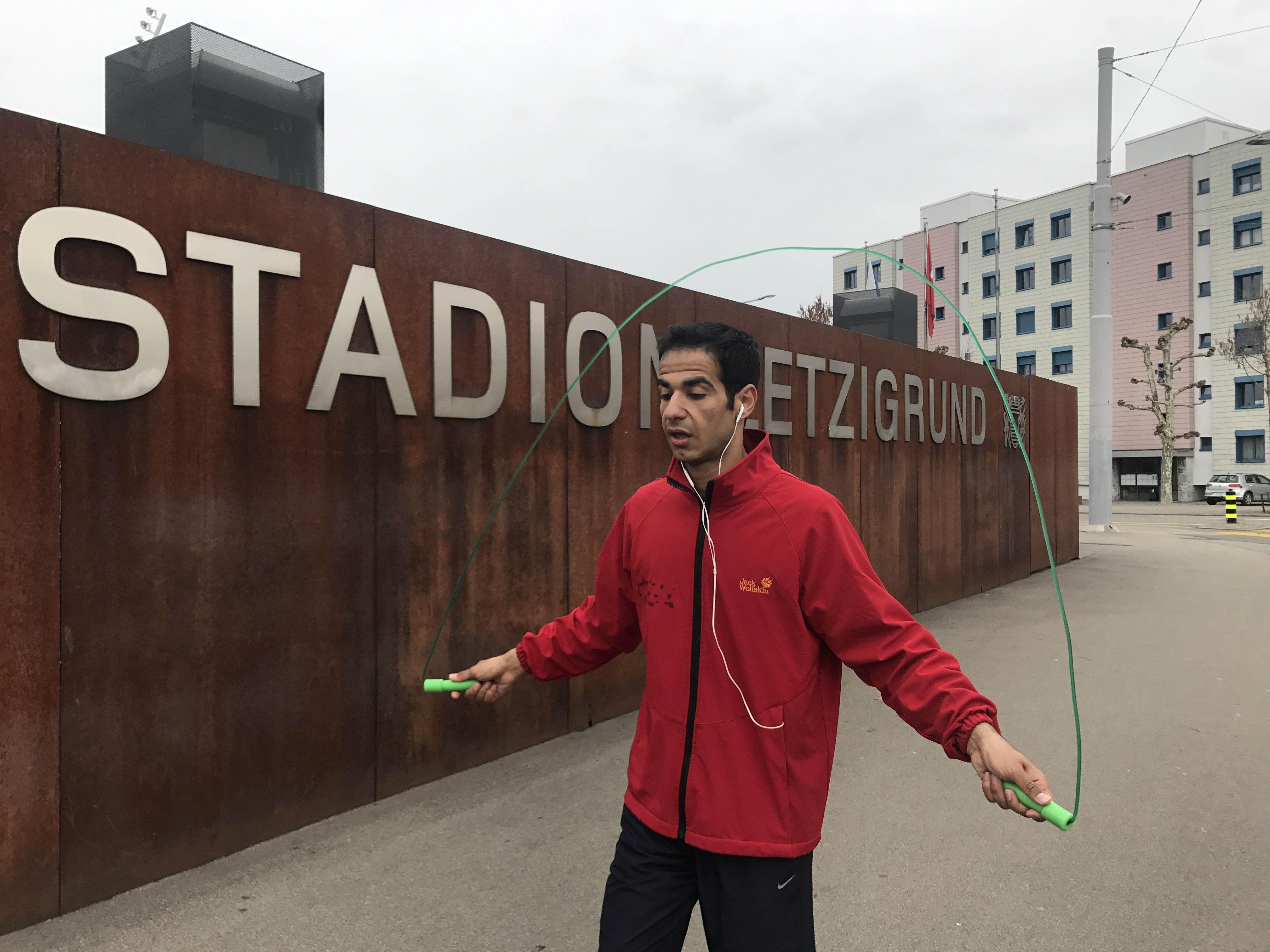
Passing through Zürich felt like a one. Amir skipped past Stadion Letzigrund — one of Switzerland's most iconic sports venues — rope arcing above his head, earbuds in, focused.
The Day in Huttwil.
Then came the day in Huttwil that Amir still can't forget.
Heavy rain. A dangerous road with trucks passing centimetres away. Dogs barking from farms. Cold, wind, a surface so slippery that each landing felt like a gamble. By the end of that day he was soaked through, exhausted, and starving.
It wasn't the only hard day. There was also illness — a stretch where his body simply gave out, and he spent days on a stranger's sofa surrounded by tissues and medication, wondering if he'd be able to continue.
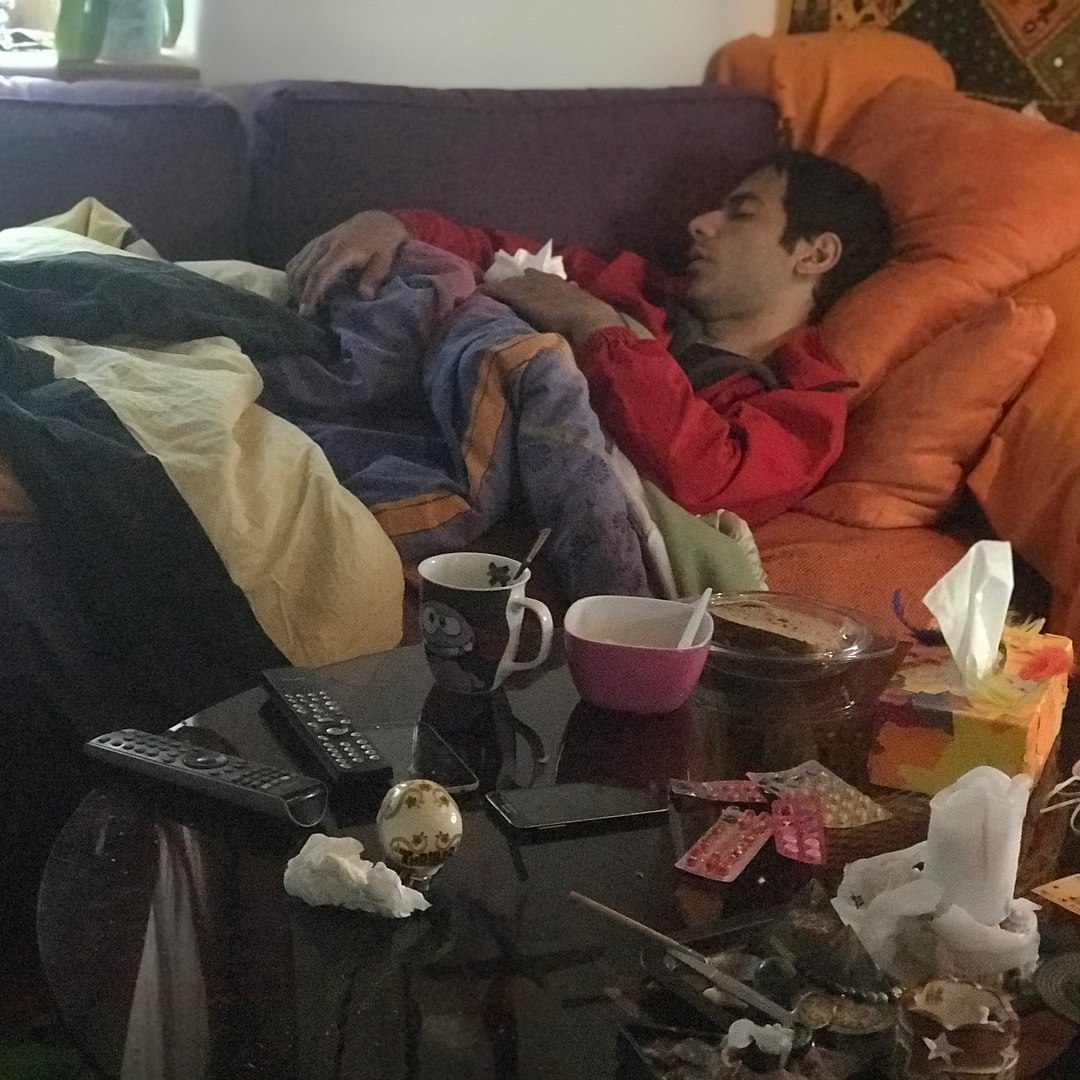
He continued.
Toward Bern. Toward the End.
After Zürich, the route turned toward Bern and the Swiss Mittelland. The lanned up. The signs now pointed toward places that felt closer to the finish. The rope kept turning.
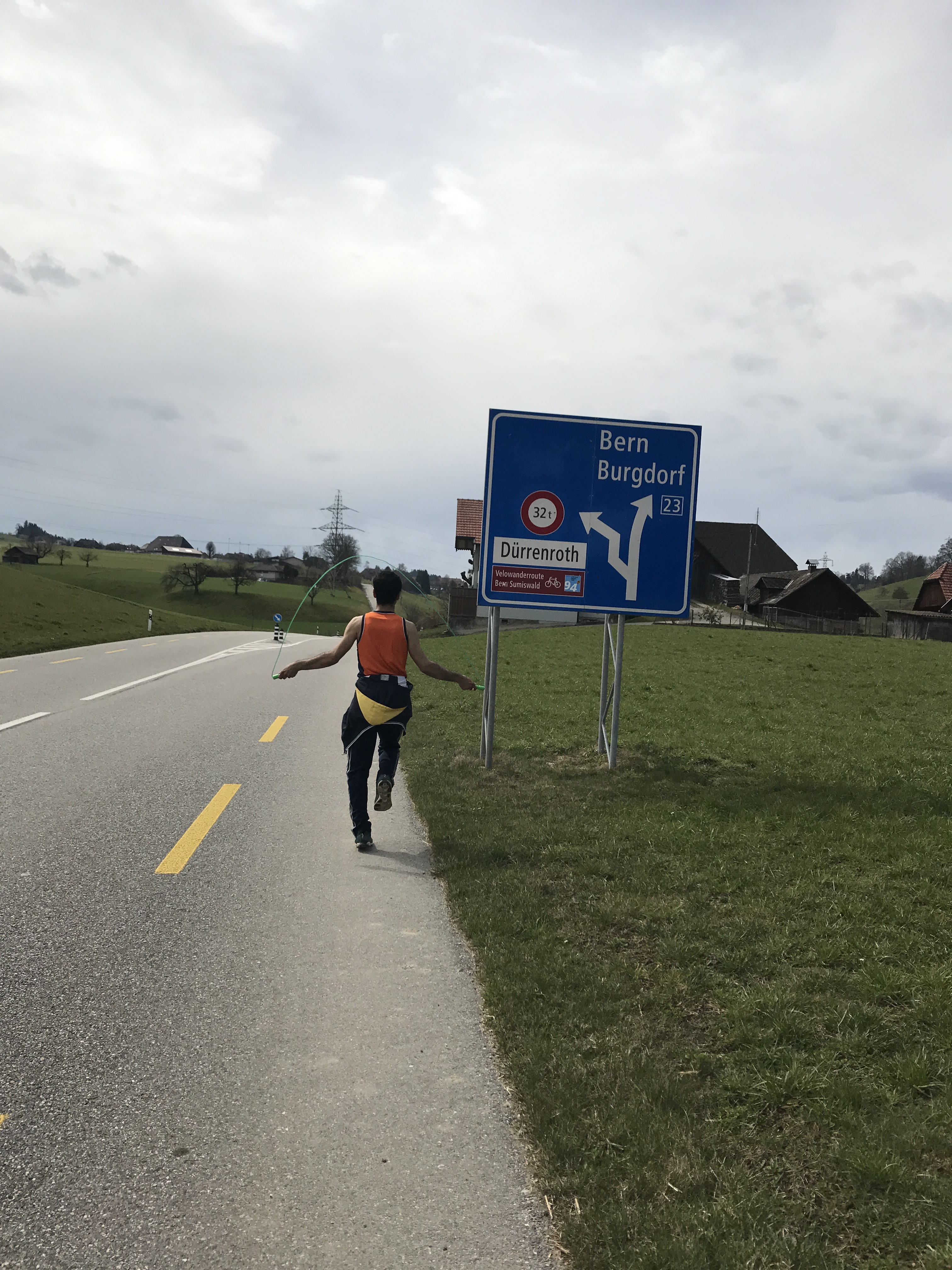
The Olympic Museum.
By the time Amir reached Lausanne, the weather had changed. Blue skies, warmer air, the lake glittering below. He skipped past Le Musée Olympique — the spiritual home of athletic achievement — and kept moving.
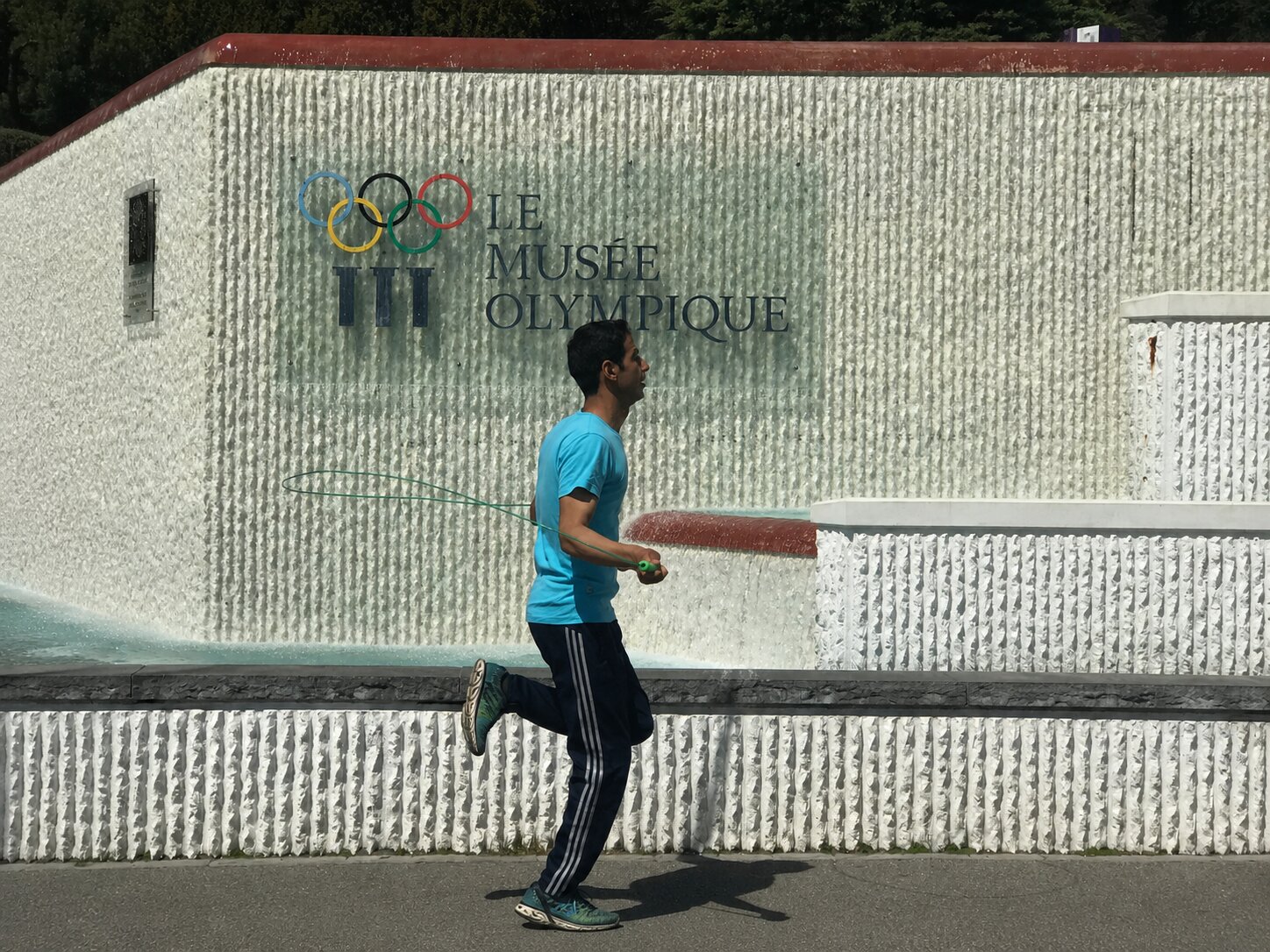
400 Kilometres from the Border.
The crossing ended at the CARE International headquarters in Geneva. Approximately 400 kilometres from the border. Weeks of movement, sub-zero mornings, media interviews conducted while still catching breath, a body pushed further than it wanted to go.
The fundraising faced its own obstacles — a Swiss crowdfunding platform rejected the application, likely due to Amir's nationality, despite the campaign being for one of the world's most established humorganizations. What couldn't be rejected was the attention. Swiss national television covered the crossing. Regional papers ran the story across four cantons. CARE International received visibility it hadn't expected from a solo athlete with a green rope.
The Proof of Concept.
The Switzerland crossing is the proof of concept behind everything 2 Good Steps does. Athletic action — sustained, public, documented — creates attention that money alone can't buy. That attention becomes donations. Donations become schools.
The rope that crossed Switzerland is the same idea behind every 2GS event today.
The Story
Ready to take
2 Good Steps?
Join an event or make a donation — every contribution builds something permanent.
Education eradicates poverty